
One of the biggest rumored changes coming to Far Cry 7 is a time limit tied to rescuing the protagonist’s kidnapped family. On paper, putting a timer inside a huge Far Cry open world sounds like a dangerous idea. After playing The Blood of Dawnwalker, however, I think it could be exactly what Far Cry needs.
Reports surrounding Far Cry 7 have suggested that its story revolves around the protagonist attempting to rescue kidnapped family members within a limited amount of time. The reported system currently gives the player 72 in-game hours, translating to roughly 24 hours of real-world playtime.
Nothing about this has been officially confirmed by Ubisoft, and with Far Cry 7 still unannounced, the system could obviously change.
But the rumor was actually one of the reasons I was so interested in playing The Blood of Dawnwalker.
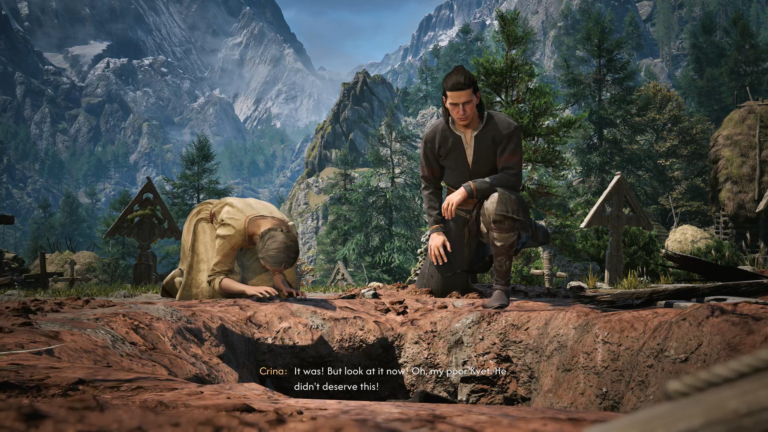
Dawnwalker uses its own time-based progression system, giving Coen 30 in-game days to accomplish his main objective. I wanted to see what happens when you put that kind of pressure into a large RPG where exploration, side quests and player freedom are supposed to matter.
After spending dozens of hours with it, I came away thinking something I didn’t expect:
This could work incredibly well in Far Cry.
A Timer Doesn’t Have to Mean You’re Constantly Racing a Clock
The biggest fear surrounding a system like this is obvious.
Far Cry is about exploration.
I don’t want to be looking at my watch while hunting, searching a cave, finding a new weapon, exploring an outpost or simply driving around the map because I spotted something interesting in the distance.
Dawnwalker showed me that you don’t have to design a time limit that way.
Time doesn’t constantly disappear simply because you’re walking around the world. Instead, specific actions and quests consume portions of your available time.
That distinction changes everything.
Imagine a similar system in Far Cry 7.
Exploring the world could cost nothing. Hunting could cost nothing. Looking for weapons, discovering locations or simply messing around in the sandbox could remain completely unrestricted.
But your decisions could cost time.
Liberating an important location might move the clock forward several hours. Helping someone with a larger side story could consume another portion. A small activity — something comparable to destroying a cult silo in Far Cry 5 — might cost considerably less.
Suddenly, the question isn’t:
“Do I have enough time to explore?”
It’s:
“Is this worth my time?”
And that’s much more interesting.
Dawnwalker Made Me Care About My Decisions
This was one of the things I liked most about The Blood of Dawnwalker.
The time system created pressure without preventing me from exploring the world.
When a character needed help, I actually had to think about whether helping them was worth spending part of my limited 30 days.
Sometimes the answer was yes.
Sometimes it wasn’t.
And sometimes I knew that choosing one person meant potentially not being able to help somebody else.
That creates something Far Cry could desperately use: consequences attached to player freedom.
Far Cry has always been good at throwing the player into an impossible situation in an unfamiliar place and basically saying:
“Good luck. Figure it out.”
You’re surrounded by enemies. You’re outnumbered. Someone you care about needs help. And somehow you’re expected to survive.
A timer connected to rescuing your own family fits that fantasy surprisingly well.
If the reports about Far Cry 7 are accurate and multiple family members can be rescued in different orders — or potentially die depending on your actions — then time becomes more than a gimmick.
It becomes part of the story.
Far Cry Has Actually Done Something Similar Before
The more I thought about Dawnwalker’s system, the more I realized something else.
Far Cry has already experimented with this idea.
Look at Far Cry 5.
Instead of traditional XP progression controlling the campaign, almost everything you did inside Hope County contributed toward the Resistance Meter in each region.
Complete missions.
Liberate outposts.
Save civilians.
Destroy cult property.
Cause enough trouble and the Resistance Meter increases.
Eventually you reach another threshold and the regional story progresses.
There wasn’t a visible clock counting down, but your activities were still directly connected to campaign progression.
And anyone who played Far Cry 5 extensively probably remembers what happened next.
You were hunted.
Reach certain points in your resistance against John, Faith or Jacob Seed and the game could effectively pull you into the next stage of that storyline.
Sometimes literally.
You could be exploring, completing activities or doing something completely unrelated to the main story, only to suddenly find yourself captured and pushed into another major story sequence.
I actually found this frustrating.
I’m a completionist, and Far Cry is one of those series where I want to explore everything.
I want every quest.
Every location.
Every activity.
But Far Cry 5 could progress a region because I accumulated enough Resistance Points before I had finished everything I wanted to do there.
The problem wasn’t necessarily the progression system.
The problem was that the game took control away from me.
And that’s exactly where Far Cry 7 could improve the idea.
Give the Pressure to the Player
Imagine taking the underlying concept of Far Cry 5 and combining it with what The Blood of Dawnwalker does.
Instead of the game deciding:
“You’ve earned enough Resistance Points. The story moves forward now.”
Far Cry 7 could ask:
“You have limited time. What do YOU want to spend it on?”
That’s a massive difference.
The pressure remains, but the agency belongs to the player.
Maybe rescuing one family member requires a large portion of your remaining time.
Maybe gathering intelligence first makes that rescue easier but costs several hours.
Maybe helping a local resistance group unlocks additional weapons or support, but doing so means delaying your main objective.
Maybe attacking an outpost isn’t required at all.
You decide whether it’s worth doing.
That’s where this system becomes exciting.
It Could Also Fix Far Cry’s Repetition Problem
Far Cry has been criticized for repetitive open-world activities for years.
Outposts. Towers. Checkpoints. Collectibles. Small encounters scattered across a huge map.
But there’s an important difference between being told to complete twenty activities and being presented with twenty activities while knowing you only have time for eight.
Suddenly, optional content really becomes optional.
Ubisoft could fill Far Cry 7’s world with things to discover without expecting every player to complete all of them during one playthrough.
One player might focus almost entirely on rescuing their family.
Another could build relationships with characters around the map.
Someone else might prioritize weapons, outposts and upgrades before attempting the major rescue missions.
And because those choices could potentially affect who survives, those playthroughs could produce genuinely different stories.
That would also give Far Cry something it hasn’t had enough of lately:
A reason to play the campaign again differently.
The Timer Could Still Go Horribly Wrong
There is obviously another side to this.
A badly implemented timer could destroy exactly what makes Far Cry enjoyable.
If I’m constantly watching seconds disappear while exploring the map, I don’t want it.
If the game punishes me for stopping to hunt, experiment with weapons or simply enjoy the sandbox, I don’t want it.
And if important missions disappear without clearly communicating the consequences of my decisions, we’d be repeating one of Far Cry 5’s biggest problems.
The system needs to respect exploration.
That’s the lesson I would take from Dawnwalker.
Let players breathe when they’re simply existing inside the world.
Make decisions consume time — not curiosity.
Dawnwalker Changed My Mind About Far Cry 7
Before playing The Blood of Dawnwalker, the idea of putting a strict time mechanic into Far Cry made me nervous.
After playing it, I’m much more interested in the possibility.
Dawnwalker showed me that a time limit doesn’t necessarily restrict an open world. Used correctly, it can actually make that world more meaningful.
And Far Cry already has experience with systems that connect open-world activities directly to story progression.
Far Cry 5 proved that.
Its Resistance Meter wasn’t perfect, and the forced progression frustrated me more than once, but the foundation was there.
Far Cry 7 could take that foundation and flip it around.
Don’t force me into the next story mission because I’ve completed too many activities.
Give me 72 in-game hours and let me decide which activities, people and objectives deserve those hours.
If Ubisoft gets that balance right, the rumored timer might not be Far Cry 7’s biggest limitation.
It could be one of its best ideas.