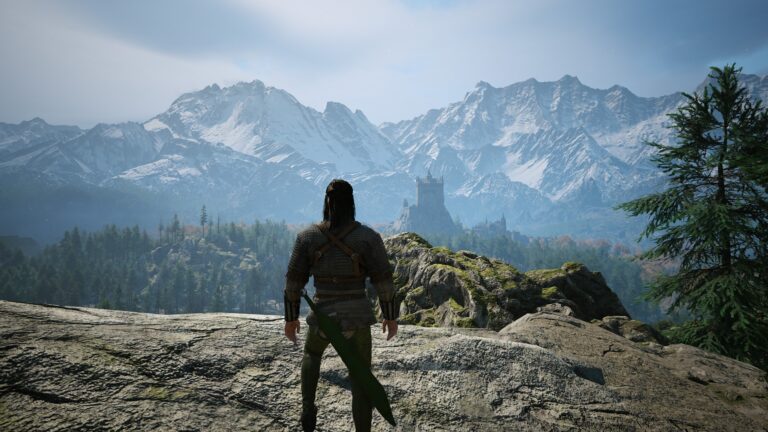

DOOM: The Dark Ages – Revelations is exactly the kind of expansion I want to see more often. It doesn’t feel like a collection of leftover ideas or a small piece of content cut from the main game. Instead, it feels like id Software took everything that worked in The Dark Ages, experimented with some genuinely new mechanics, and went all-in on delivering one more brutal adventure for the Doom Slayer.
And after playing the main game and Revelations almost back-to-back, I came away with one very simple thought: gaming needs DOOM.
Revelations Picks Up Right Where The Dark Ages Ended
One of the first things I appreciated about Revelations is how directly it connects to the ending of the main game.
There is no feeling that we have suddenly jumped into an unrelated side story. The opening cinematic immediately establishes that this is a continuation of what we experienced in The Dark Ages, and it doesn’t take long before things escalate dramatically.
Very dramatically.
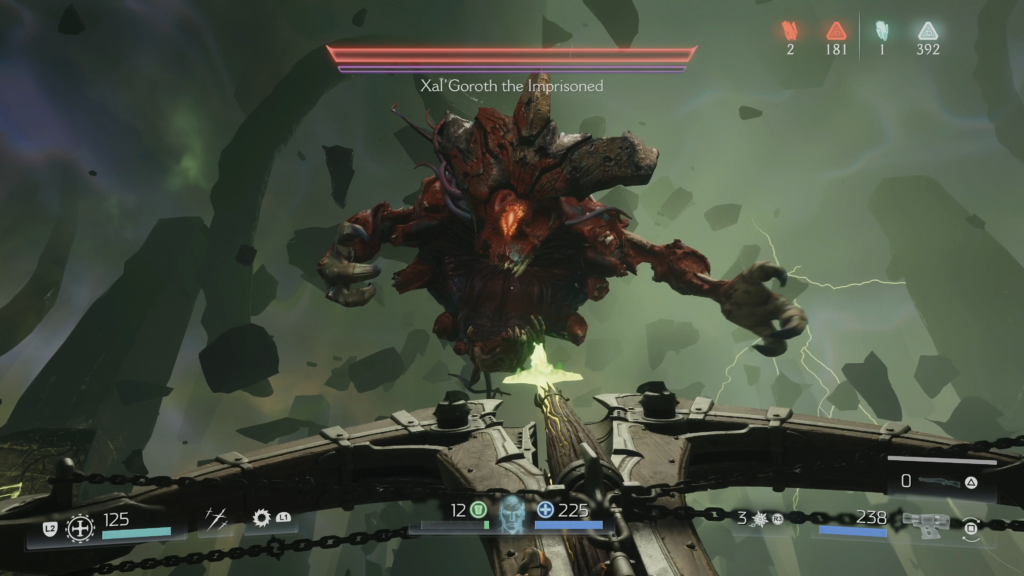
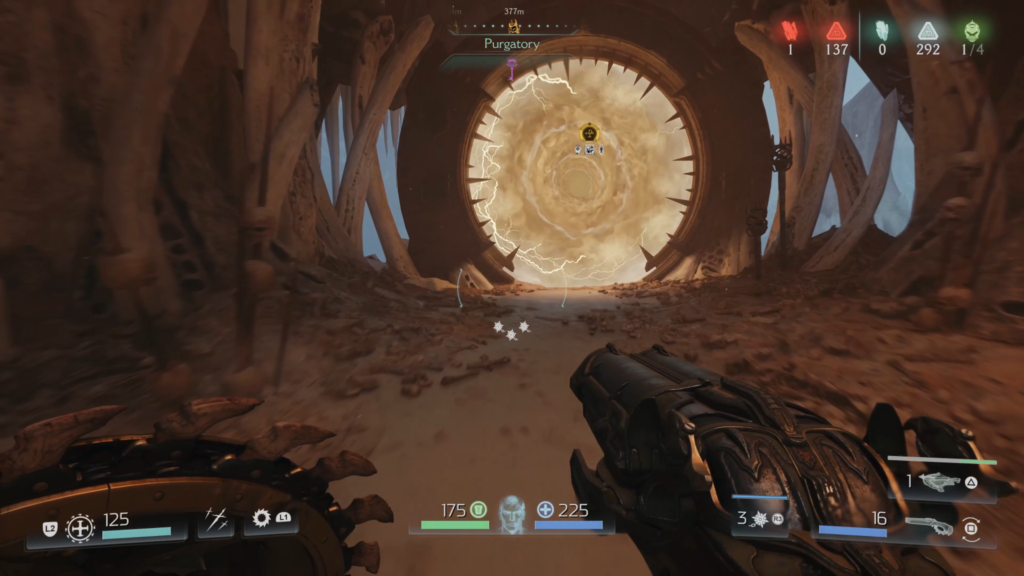
Early in the expansion, the Slayer faces an enormous enemy in a spectacular encounter that doesn’t exactly go according to plan. The result leaves us stranded in Purgatory – and without one of the most important tools we spent the entire main game learning to use.
The Shield Saw is destroyed.
After spending more than 20 hours using the shield throughout my playthrough of The Dark Ages, suddenly losing it felt almost wrong. But that’s exactly where Revelations introduces its biggest new gameplay idea.
The spear.
The Spear Changes How You Play DOOM
Instead of the shield, the Slayer receives a newly forged spear that becomes one of the central mechanics of Revelations.
And I’ll admit: I wasn’t immediately sold on it.
The spear introduces new abilities and movement mechanics, including evasive maneuvers that allow you to avoid incoming attacks and projectiles. More importantly, it completely changes traversal.
Certain parts of the environment can be reached by launching yourself through the air using the spear, opening up areas that would have been impossible to access with the movement system from the main game. In that regard, Revelations occasionally reminded me more of DOOM Eternal.
And that’s a compliment.
There is noticeably more emphasis on movement and verticality here. You’re flying between platforms, searching for routes through environments and combining traversal mechanics with the aggressive combat that defines modern DOOM.
The problem I had with the spear wasn’t necessarily the weapon itself.
It was timing.
I had just spent roughly 20-plus hours playing The Dark Ages and developing muscle memory around the Shield Saw. I knew exactly how I wanted to react to attacks, which buttons I wanted to press and how the shield fit into my combat rhythm.
Then Revelations suddenly told me: here’s a spear.
Learn this now.
Had I finished The Dark Ages when it originally released and returned months later for Revelations, I suspect I would have appreciated the change much more. Playing everything almost continuously made the transition noticeably harder.
Thankfully, id Software made a very smart decision.
You Don’t Have to Abandon the Shield
Eventually, the Shield Saw returns.
And once it does, Revelations doesn’t force you to permanently choose its shiny new mechanic over something that already worked incredibly well.
You can switch between the spear and shield almost instantly – on a controller, it’s simply a press up on the D-pad.
That small decision makes a huge difference.
Players who love the spear can continue building their playstyle around it, while those who spent the entire main game becoming comfortable with the shield can return to something familiar.
There are still specific traversal and level-design sections where the spear is required, but during regular gameplay you have considerably more freedom.
The returning shield initially doesn’t have everything we previously unlocked in the main game, including some of the rune functionality we became accustomed to, but I honestly didn’t find that particularly disruptive.
There are also additional abilities and upgrades that can be purchased using currencies found throughout the expansion.
Without getting into major spoilers, Revelations eventually brings things full circle in a way that should feel satisfying to players coming directly from The Dark Ages.
It’s a clever compromise: introduce something genuinely new without throwing away one of the defining mechanics of the original game.
The Level Design Is Fantastic
Revelations isn’t carried by one new weapon.
The environments themselves are among the biggest reasons I enjoyed the expansion as much as I did.
The DLC takes you through several major areas, and each one feels carefully designed rather than simply existing as another backdrop for combat.
There are secrets everywhere.
There are puzzles.
There are environmental challenges.
There are traversal sections.
There are huge arenas packed with demons.
And, naturally, there is an absolutely ridiculous amount of fighting.
That’s exactly what I want from DOOM.
Visually, some of these environments are stunning. There were plenty of moments where I stopped simply moving toward the next objective and started exploring because I wanted to see what was hidden around me.
The spear also gives the developers considerably more freedom with level design. Areas can stretch vertically in ways that wouldn’t have worked as naturally with the original movement mechanics, while secrets can be hidden in places that initially appear unreachable.
It makes exploration feel meaningful rather than something you’re doing solely to clear icons from a map.
Combat Is Still the Star of the Show
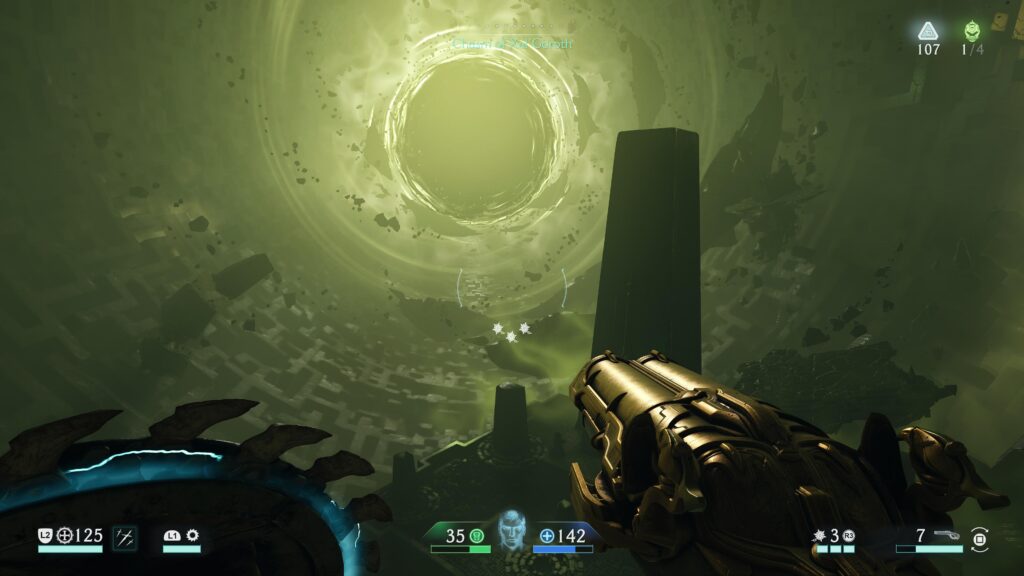
Despite all the new mechanics, puzzles and traversal, this is still DOOM.
And when Revelations decides it’s time to fight, it doesn’t hold back.
The expansion regularly throws large groups of enemies at you and demands constant movement, quick reactions and aggressive decision-making.
The best encounters create that familiar DOOM flow where you’re barely thinking about individual actions anymore. You’re moving, shooting, dodging, executing enemies and switching between tools almost instinctively.
Everything becomes controlled chaos.
Few games do this as well as DOOM.
Revelations understands that.
Rather than attempting to reinvent the fundamental combat loop, the expansion builds additional mechanics around something that was already excellent.
There’s Plenty to Do After the Story
Another thing I really appreciate is that finishing the story doesn’t immediately mean you’ve exhausted everything Revelations has to offer.
There are major encounters toward the end of the campaign, additional challenges and content that becomes available afterward.
Most importantly, there are additional combat arenas designed around continually testing yourself.
These give players who simply want more DOOM combat somewhere to push their skills after completing the main content.
For an expansion built around combat, that makes perfect sense.
It also gives Revelations considerably more longevity than a DLC that simply ends after the credits roll.
Completionists have secrets and additional objectives to chase, while players who care primarily about combat have another reason to keep playing.
Revelations Feels Like id Software Going All-In
What impressed me most about Revelations is how complete it feels.
The story is interesting enough to justify its existence.
The environments are gorgeous.
The combat remains excellent.
The new traversal mechanics significantly change exploration.
The spear introduces a genuinely different playstyle without completely replacing the Shield Saw.
There are puzzles, secrets, boss encounters and post-game challenges.
It feels like id Software understood that an expansion for The Dark Ages couldn’t simply give players a few more corridors filled with demons.
It needed its own identity.
Revelations has one.
My only significant criticism comes from my personal experience with the spear. Coming directly from more than 20 hours of Shield Saw gameplay, being asked to suddenly relearn parts of the combat system wasn’t something I immediately enjoyed.
But even that criticism is softened considerably by the ability to switch back to the shield later.
Instead of saying, “This is the new mechanic, deal with it,” the game eventually gives players a choice.
That’s exactly how new mechanics should be introduced in an expansion.
DOOM Is Still Something Gaming Needs
Playing The Dark Ages followed immediately by Revelations also reminded me of something I had perhaps forgotten over the years.
There really isn’t much else like DOOM.
Modern games increasingly ask for dozens – sometimes hundreds – of hours. They surround players with progression systems, endless objectives, enormous maps and increasingly complicated mechanics.
DOOM can have progression, exploration and secrets too, but underneath everything is an incredibly simple promise:
You’re going to have fun killing demons.
Fast.
Loud.
Brutal.
Ridiculous fun.
That purity is something gaming needs.
When DOOM is at its best, there is almost no downtime between you and the next moment that makes you grin at the screen.
Revelations understands that perfectly.
And after finishing it, I’m already hoping this isn’t the last time we see this version of the Doom Slayer.
Whether id Software has another expansion planned or eventually moves toward an entirely new DOOM game, I want more of this.
CATEGORY SCORES
DOOM: The Dark Ages – Revelations earns a 9/10.
It’s an excellent expansion that builds upon the strengths of the main game while being confident enough to experiment with new ideas.
The spear won’t necessarily click immediately with everyone – particularly players jumping directly from the main campaign into the DLC – but the decision to eventually allow seamless switching between the spear and Shield Saw prevents the new mechanic from becoming frustrating.
Combine that with beautiful environments, excellent level design, puzzles, secrets, massive battles, memorable boss encounters and meaningful post-game content, and Revelations becomes an easy recommendation for anyone who enjoyed The Dark Ages.
More importantly, it reminded me why DOOM has survived for so long.
There are faster games.
There are bigger games.
There are games with deeper stories and more complicated systems.
But very few games deliver the same kind of immediate, unapologetic fun.
More DOOM, please.
FINAL VERDICT
OVERHYPED SCORE
9/10