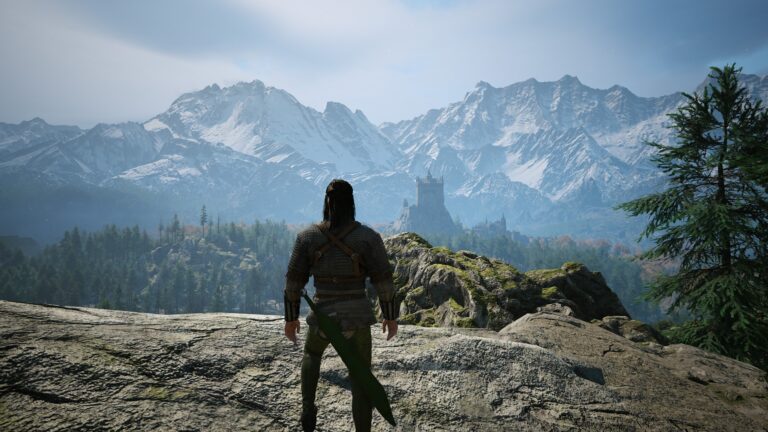

There is something almost deceptive about the opening hours of The Blood of Dawnwalker.
You begin slowly. You chop wood, walk around a village, meet its people and get introduced to a world that initially doesn’t necessarily suggest that something extraordinary is waiting around the corner.
Give it a few hours.
Before long, you are making decisions with potentially serious consequences, meeting the four major antagonists standing between Coen and his family, fighting vampires, developing supernatural abilities and, most importantly, constantly thinking about one resource that most RPGs allow us to completely ignore:
Time.
The Blood of Dawnwalker gives Coen 30 in-game days to save his family. That concept was what originally attracted me to the game, but after roughly 65 hours, a Platinum Trophy and seeing the different ways Coen’s story can conclude, it also became the reason I appreciated the game far more than I expected.
The 30-day limit sounds restrictive.
In reality, it is one of the smartest RPG systems I have experienced in a long time.
And ironically, Dawnwalker taught me something I didn’t expect a vampire RPG to teach me at all:
Sometimes, the most important decision isn’t what you choose to do.
It’s deciding what is worth your time.
INFO
DEVELOPER
Rebel Wolves
PUBLISHER
Bandai Namco
RELEASE DATE
September 3 2026
GENRE
Action RPG
PLATFORMS
PS5, Xbox Series X/S, PC
REVIEW KEY
Bought myself
PLAYTIME
65 Hours
REVIEWED ON
PS5 PRO
30 Days Sounds Much Scarier Than It Actually Is
The moment a game tells me I have a time limit, my instinct is usually the same: I need to hurry.
The Blood of Dawnwalker initially creates exactly that feeling.
Coen has 30 days to save his family, and many actions move time forward. Certain quests consume time segments. Activities consume time. Even learning or upgrading some abilities can cost not only skill points, but precious time.
At first, that creates genuine pressure.
Should I investigate this quest now?
Should I spend the night weakening one of the major vampires?
Should I use several hours helping someone who might have absolutely nothing to do with saving Coen’s family?
Do I really need this ability badly enough to sacrifice time learning it?
The brilliant part is that eventually you realize that 30 days is much more generous than it sounds.
A single day contains enough time segments to complete numerous smaller activities or several larger ones, and then you effectively receive another set of opportunities during the night. If you manage your time reasonably well, there is an enormous amount you can accomplish before reaching the deadline.
I certainly did.
By the time I approached the endgame, Coen was already around level 30. I had completed a huge amount of side content, acquired powerful equipment and dealt with major antagonists while still having enough breathing room to explore.
The 30-day system therefore becomes something very different from a traditional timer.
It isn’t really there to rush you. It is there to make your decisions matter.
After the first ten or so in-game days, much of my initial fear disappeared. I understood the system. I knew how much I could accomplish and, after eliminating some major threats relatively early, I felt increasingly in control.
But the timer had already changed how I played.
And that effect never completely disappeared.
Dawnwalker Made Me Value My Time
This was probably my favorite aspect of the entire game.
Most open-world RPGs encourage completionism through abundance. Your map fills with icons, quests and activities, and the natural reaction is to slowly work through everything.
Dawnwalker asks a different question:
What actually matters to you?
I started planning my days.
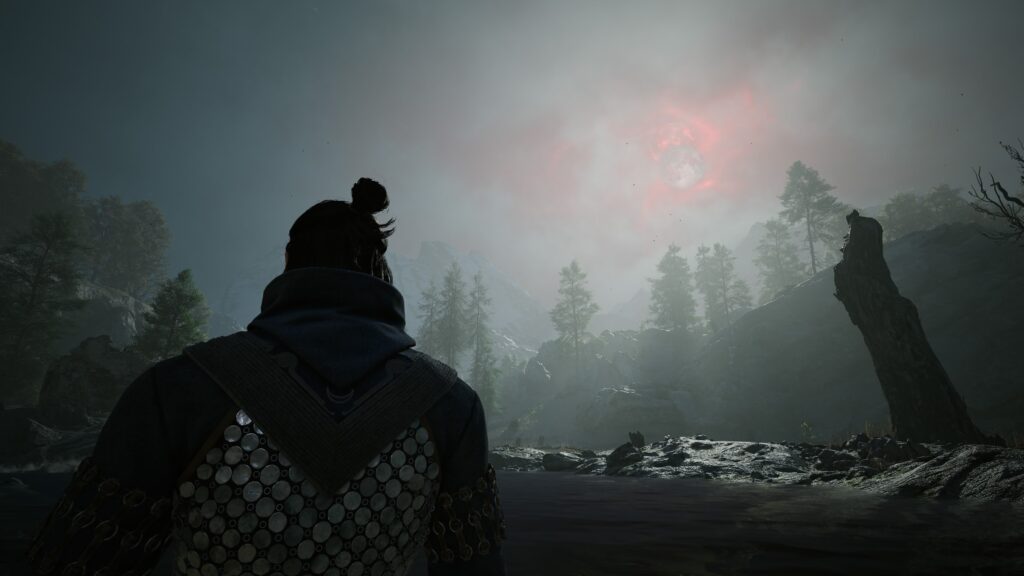
During daylight, I often focused on quests involving ordinary people. At night, when Coen’s vampiric side becomes more important, I concentrated on activities related to the major antagonists.
Part of that decision was strategic.
I didn’t particularly want to risk turning up to help some innocent villager at night only for my vampire problems to complicate the situation.
Instead, nighttime became my opportunity to deal with the darker side of the world, improve Coen’s vampiric capabilities and work toward weakening the game’s major enemies.
It created a routine that the game never explicitly forced upon me.
It was my routine.
And that is where Dawnwalker succeeds as an RPG.
The system reminded me surprisingly often of real life. If you want to achieve something, you have limited resources. You have limited time. You cannot prioritize everything equally.
You choose a goal, decide what you are willing to sacrifice and determine how you are going to reach it.
Few games make me think about side quests in those terms.
Dawnwalker did.
A Slow Beginning Gives Way to an Excellent Story
The opening is deliberately restrained, but it doesn’t stay that way for long.
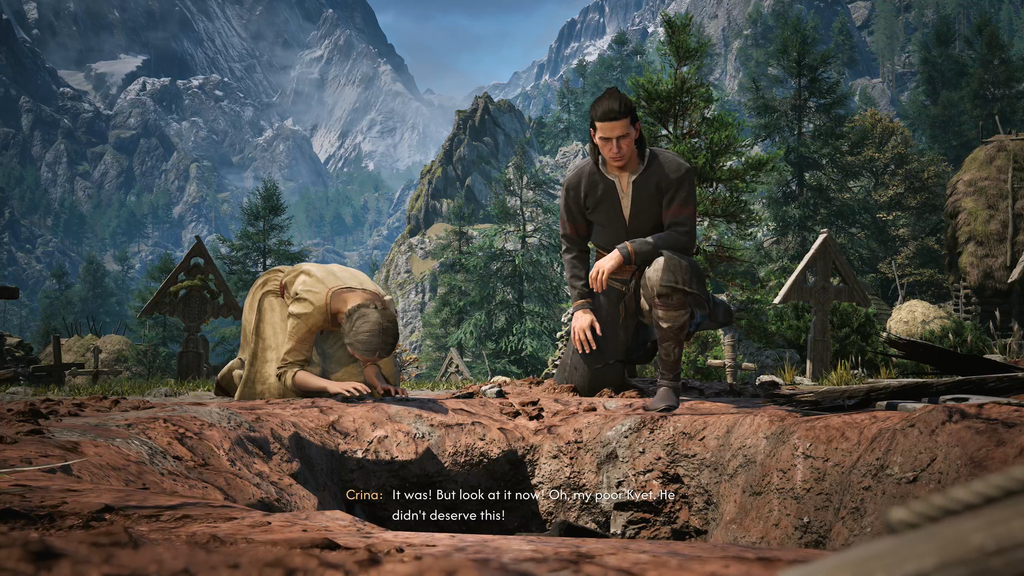
Within the first few hours, Dawnwalker accelerates dramatically. You are introduced to important characters, major decisions arrive surprisingly early and the game’s principal antagonists quickly establish themselves.
That transition was the moment the game grabbed me.
The quality of the writing varies — there were absolutely conversations I skipped because they felt unnecessarily long or simply weren’t interesting enough — but at its best, The Blood of Dawnwalker features some of the strongest writing I have experienced in an RPG recently.
The main storyline is excellent, but several character-focused questlines deserve just as much credit.
Characters such as Anka and Lacra gradually stop feeling like NPCs placed around the world to distribute quests. Their histories, relationships and interactions with Coen make the valley feel surprisingly personal.
At its best, it almost feels like Coen has returned to a neighborhood full of people with whom he shares years of history rather than entering an open-world checklist.
Not every side quest reaches that standard. Some exist without leaving much of an impression, and the amount of dialogue occasionally works against the pacing.
But when Dawnwalker’s writing works, it really works.
Coen Deserves to Be More Than “Geralt With Fangs”
Comparisons are inevitable.
Coen is a monster-adjacent protagonist walking around a grim medieval world, making difficult decisions and swinging a sword at things that generally deserve it.
Yes, the comparisons write themselves.
But after spending roughly 40 hours with him, I stopped thinking about them.
Coen works extremely well as a protagonist.
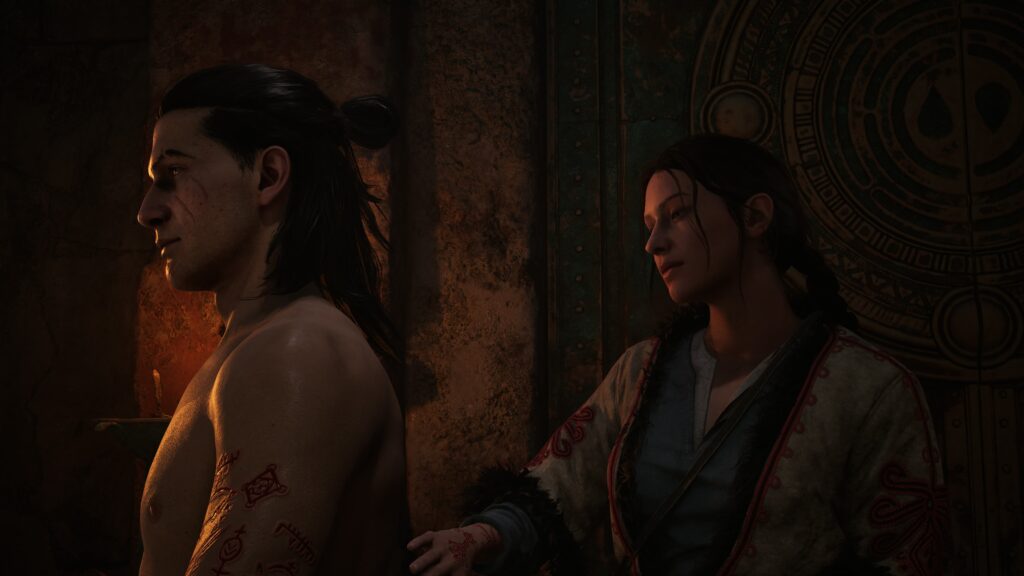
His voice acting is excellent, his restrained personality suits the story and his facial expressions help sell conversations that could otherwise have felt overly static. By the end, I had developed a genuine attachment to the character.
I want to see him again.
Whether that happens through DLC, an expansion or a sequel, I would happily spend another adventure with Coen.
Ironically, I wasn’t nearly as attached to the people I was supposed to be saving.
Coen’s family provides the central motivation behind the 30-day deadline, but I never developed the same emotional need to rescue them that the premise seemingly expected from me. At different points, members of the family behaved in ways that made me question why I should care this much.
I still saved them because it felt like Coen’s responsibility — and, by extension, mine.
But there is an important difference between understanding why the protagonist wants to save someone and personally wanting to save them yourself.
For a game built around that objective, this emotional disconnect is noticeable.
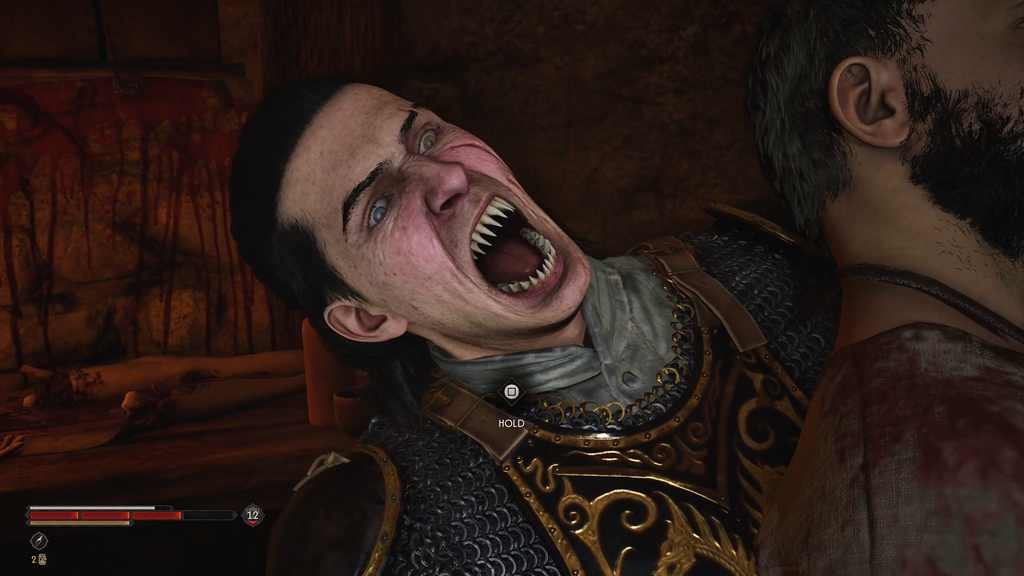
Your Decisions Don’t Disappear After the Dialogue Box
Choice and consequence is where The Blood of Dawnwalker becomes genuinely impressive.
Plenty of RPGs tell you that your choices matter.
Dawnwalker is unusually good at reminding you of those choices hours later.
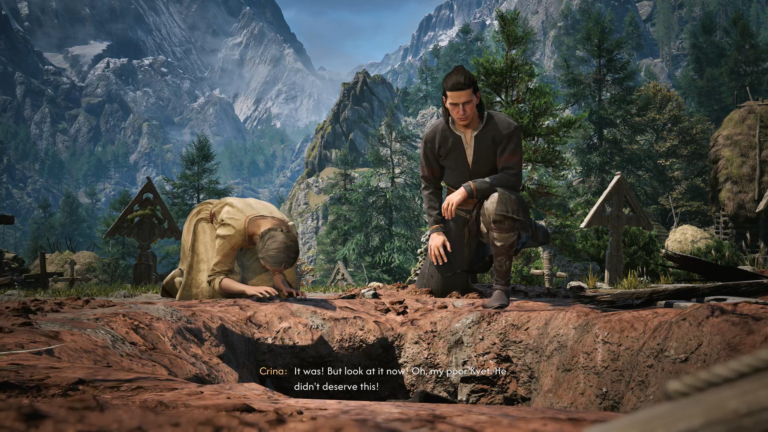
During one sequence, I helped a character looking for an engraved ring that he hoped could be used to save his brother.
Around ten hours later, while exploring another village, I encountered someone lying on the ground.
It was his brother.
The attempt to save him had failed, and the situation had reached a tragic conclusion.
The game didn’t need to put a giant notification on the screen saying YOUR CHOICE HAD CONSEQUENCES.
I simply found the consequence while continuing my journey.
Similar moments happened repeatedly.
I could rescue someone from captivity and encounter them later. Characters I helped could reappear. Decisions could change relationships and circumstances elsewhere in the world.
Even major characters aren’t necessarily protected simply because the writers spent hours developing them.
That unpredictability gives the world teeth.
Dawnwalker doesn’t simply remember what you selected in a dialogue box.
It remembers what you did.
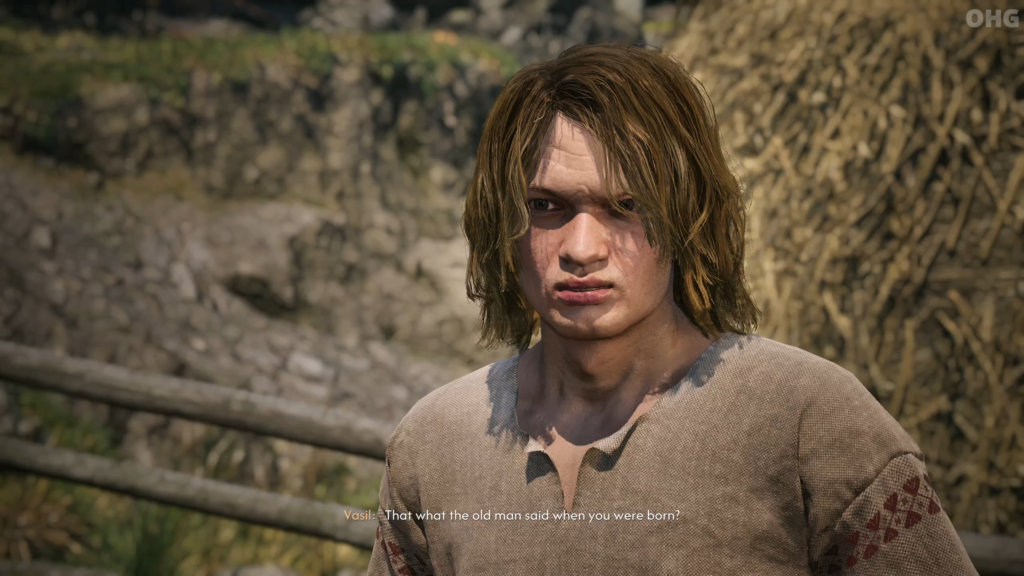
The Antagonists Are More Than Four Names on a Checklist
The four principal antagonists also deserve individual credit.
For me, the ranking was clear:
Brencis first, Bakir second, Ambrus third and Xanthe fourth.
Brencis is an excellent central antagonist.
From your earliest encounters, something is clearly wrong with him. He is unpredictable, disturbing and compelling enough to justify the long journey toward confronting him.
More importantly, optional character content can substantially deepen your understanding of his history. Lacra’s questline, in particular, provides valuable context surrounding Brencis and how he became the vampire you eventually face.
That additional context made him significantly more interesting than a standard final villain waiting inside a castle.
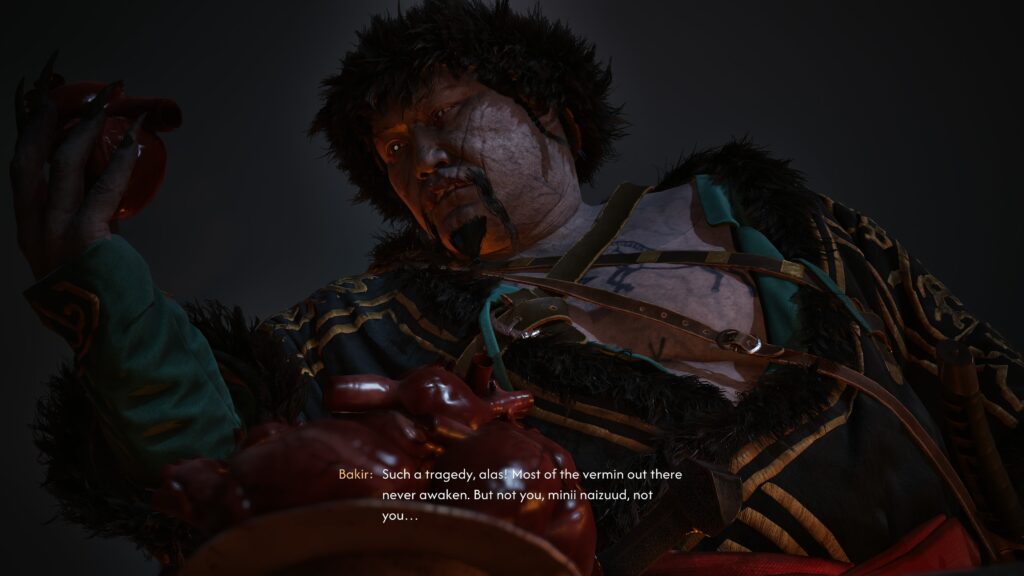
Bakir, meanwhile, gave me one of my favorite moments in the game.
I fought him under different circumstances while exploring different outcomes, and his personality translates brilliantly into combat. He treats violence almost like a celebration — an unhinged warrior enjoying every second of it.
My fight against Bakir was one of the moments when I realized:
Yeah, this game is special.
Ambrus has a different appeal. He is arrogant, confrontational and completely full of himself, which makes bringing him down particularly satisfying.
Xanthe was my least favorite of the four as a character, but ironically provided one of my favorite examples of Dawnwalker’s freedom.
While exploring a church in search of the Sword of Saint Michael, I stumbled into Xanthe before completing the activities I had expected would lead me toward her.
Suddenly, I was fighting a major boss.
No carefully scheduled quest progression. No long checklist telling me I was now allowed to confront her.
I had simply explored somewhere interesting and found myself face-to-face with one of the game’s principal enemies.
I loved that.
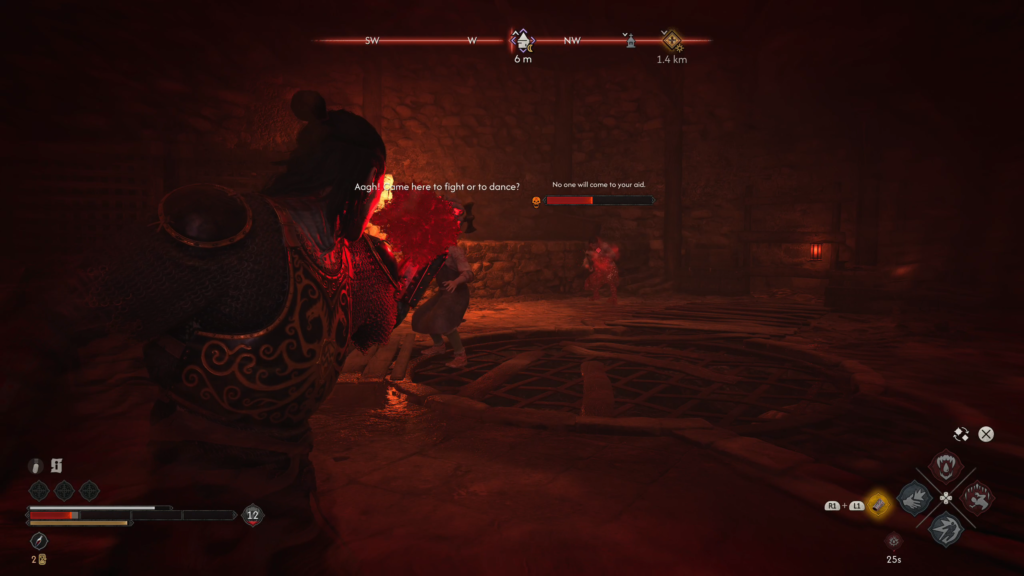
Combat Is Best When You’re Fighting People
I played on Duelist, one of the harder difficulty settings, partly because I intended to earn every trophy.
It ended up being one of the best decisions I made.
Playing at a higher difficulty forced me to engage with systems I could potentially have ignored otherwise.
I couldn’t simply mash attack until something died.
Enemies block. They counterattack. Positioning matters. Elixirs matter. Your abilities matter.
On Duelist, I didn’t have the directional assistance available on easier settings showing where an incoming attack was coming from. Players using those assists can more easily respond in the correct direction and potentially land perfect parries.
I couldn’t rely on that.
And because parrying was never my greatest strength, I adapted.
I became more evasive. I created distance. I used abilities to attack from safer positions. I prepared for difficult encounters and thought about the enemies I was approaching instead of blindly running into them.
That made progression satisfying because I wasn’t simply watching Coen’s numbers increase.
I was getting better at playing him.
Sword combat against human opponents is particularly enjoyable. Fighting with Coen’s vampiric claws also feels suitably aggressive and gives nighttime combat its own identity.
Unfortunately, the same praise doesn’t extend to animals.
Wolves, boars, bears and similar enemies are considerably less enjoyable to fight, and the problem becomes worse because the world contains so many of them.
There were numerous occasions where I was simply trying to reach a destination, got dragged into an unwanted animal encounter and suddenly had to waste several minutes fighting something I never wanted to engage with.
On Duelist, that could become genuinely irritating.
Wander into an area containing enemies stronger than expected, get trapped in combat, die and discover that your previous save was twenty minutes ago.
There’s a certain old-school charm to that danger.
There’s also a certain “for God’s sake, I was just trying to get over there” frustration.
Human by Day, Vampire by Night
Coen’s dual nature creates one of Dawnwalker’s more interesting gameplay rhythms.
During the day, I increasingly relied on sword-based abilities and equipment. At night, I invested more heavily into vampiric skills, particularly claw damage and improvements that helped Coen survive.
Vampirism also changes how you manage health.
Being able to feed provides an alternative to constantly consuming healing items, including during or following difficult encounters.
Witchcraft offers another branch of progression. I personally used it less frequently, although one early ranged ability became extremely valuable on Duelist because it allowed me to damage dangerous enemies without immediately committing to close combat.
I appreciated having these choices.
Sword Mastery, Witchcraft and Vampire abilities allow you to shape Coen around your preferred approach rather than simply unlocking everything in a predetermined order.
There is, however, one design decision I’m conflicted about.
Higher-level abilities can require both skill points and time to learn.
Conceptually, I understand it.
Learning something takes time. In a game built entirely around the value of time, it makes thematic sense that becoming stronger should require sacrificing some of it.
Mechanically, I wasn’t always convinced.
Sometimes I simply wanted to develop my character without feeling like I was sacrificing opportunities elsewhere.
It is one of those systems I simultaneously admire and dislike.
And perhaps that contradiction perfectly summarizes Dawnwalker.
Loot Gives You a Reason to Wander Off the Road
Equipment progression fares better.
Powerful weapons and armor are genuinely worth finding, and the game does a good job of hinting toward legendary equipment through quests and environmental clues.
You can deliberately pursue these items.
Or you can simply explore.
I frequently found useful equipment by wandering around, fighting enemies and investigating locations that weren’t immediately relevant to my current objective.
That makes exploration rewarding even when the open world itself isn’t particularly impressive.
Crafting is less memorable.
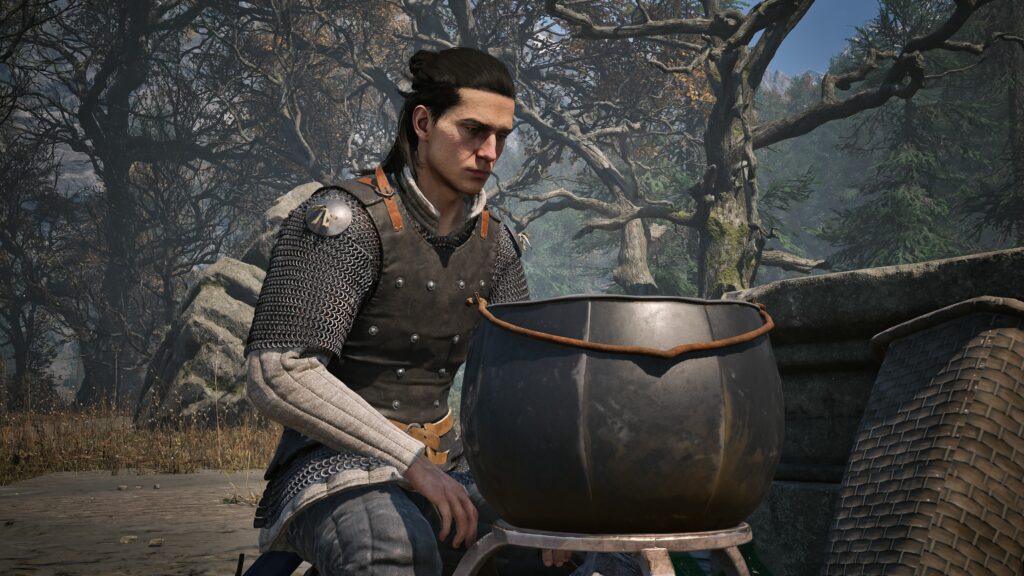
I used it. I crafted healing items, balms and other useful resources. But I rarely spent much time thinking about it.
Most of the time my thought process was essentially:
I have the materials.
I can craft this.
Craft it.
Move on.
The system works, but it never became a meaningful part of my personal experience in the way combat, progression and time management did.
Svartrau Rewards Curiosity, but Not Sightseeing
This is probably my biggest disappointment with The Blood of Dawnwalker.
The world is not enormous, which I actually appreciate.
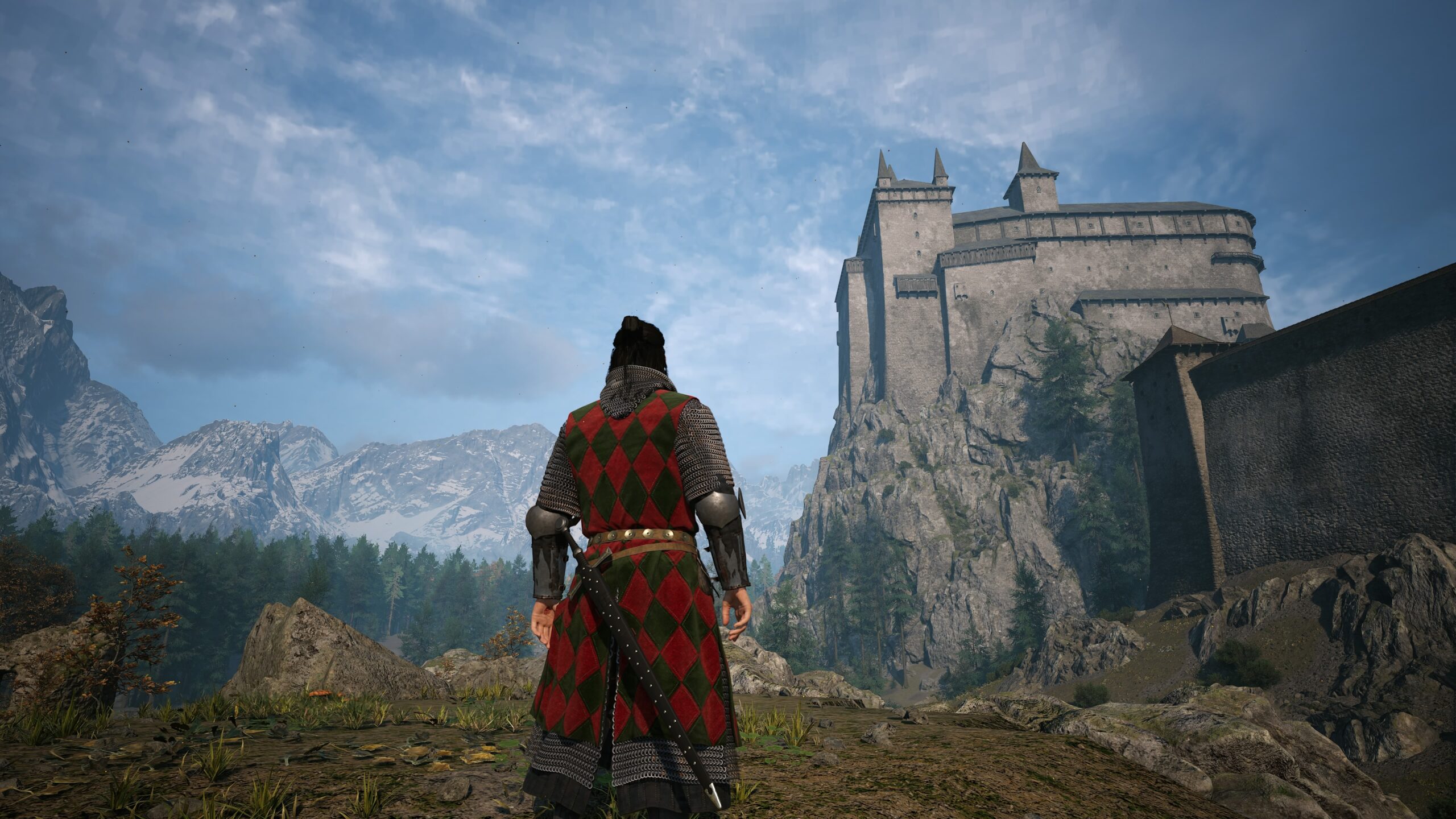
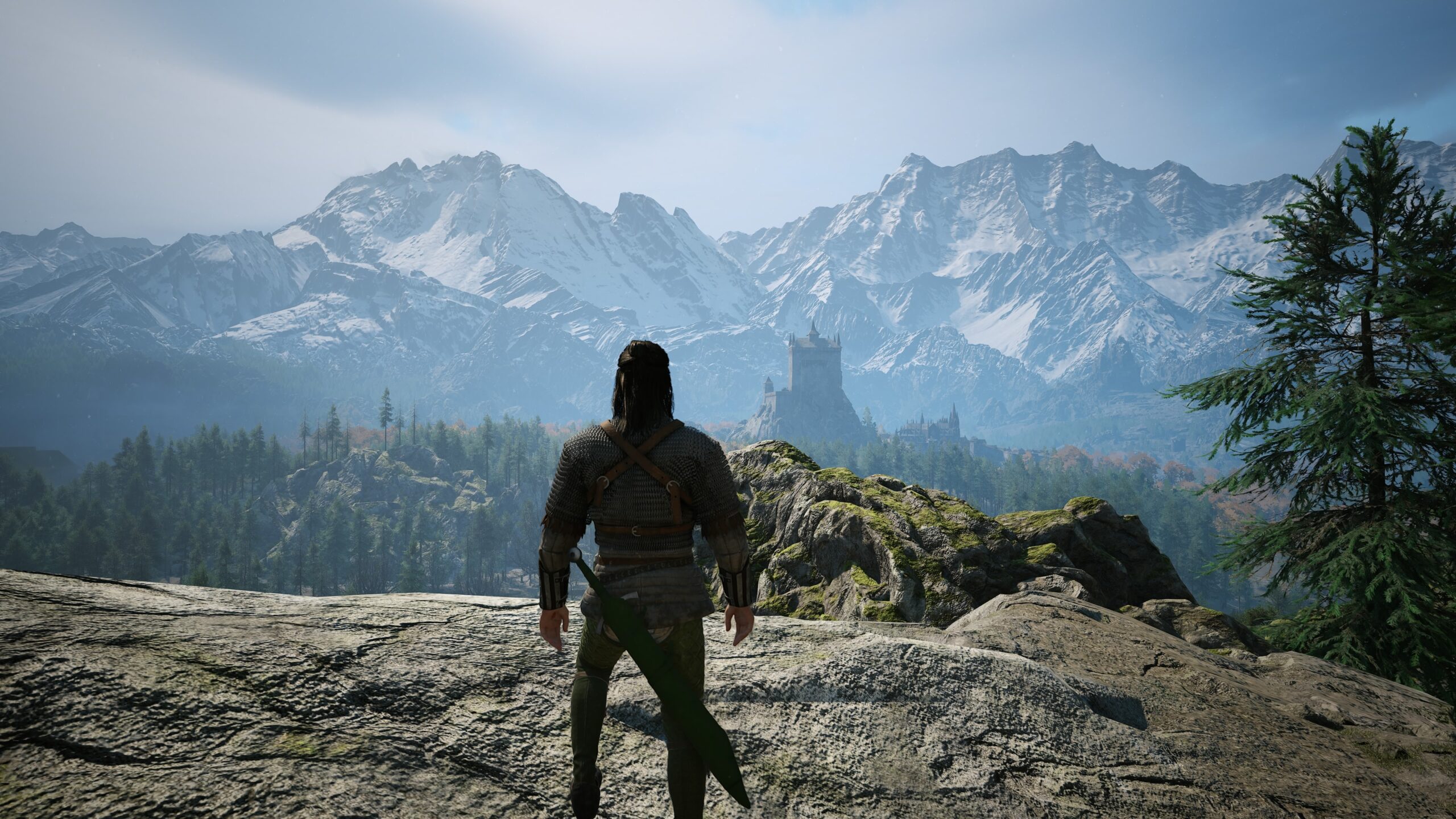
Instead of another gigantic map designed to consume 100 hours, we get a relatively contained medieval valley centered around Svartrau and several surrounding villages.
The problem isn’t size.
The problem is density and variety.
Too many areas feel visually similar.
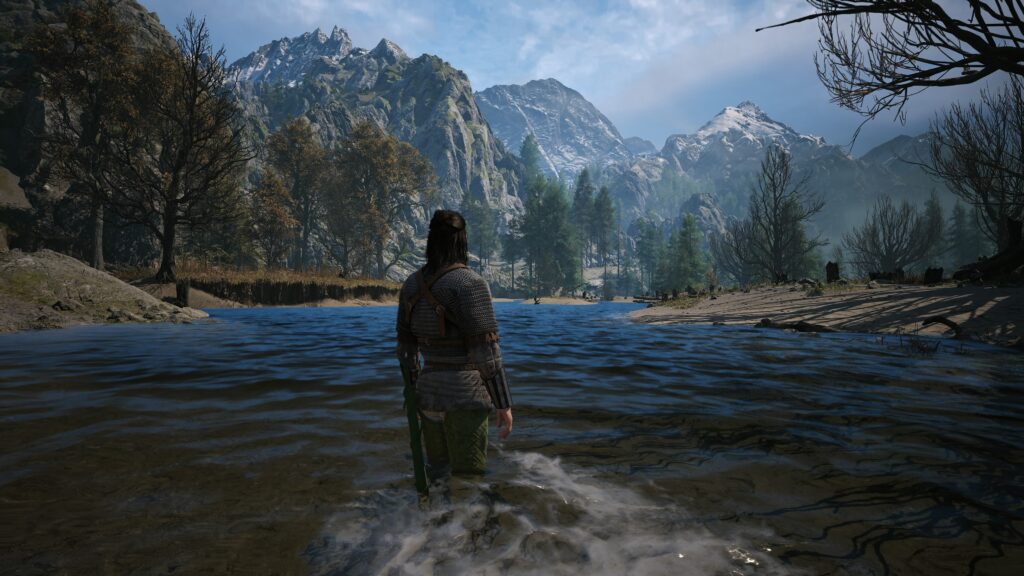
I rarely experienced that classic open-world moment where I entered a completely different environment and immediately wanted to stop simply to look around.
There are different locations, certainly, but not enough of them possess a strong visual identity.
The surrounding villages aren’t particularly memorable either. I would have loved more settlements, another substantial town or simply stronger architectural and environmental differences between existing locations.
Large portions of the countryside also feel underpopulated.
And then there are the animals.
So. Many. Animals.
Wolves and other aggressive wildlife regularly interrupt traversal, exacerbating the feeling that the spaces between meaningful locations aren’t always being used particularly well.
Yet strangely, I still enjoyed exploring.
That’s because Dawnwalker rewards curiosity better than it rewards sightseeing.
Exploration can uncover valuable equipment, unexpected quests, characters and completely unplanned encounters.
My accidental confrontation with Xanthe is the perfect example.
The world itself didn’t always make me want to explore.
What I might find inside it did.
That’s an important distinction.
Day and Night Eventually Lose Some of Their Magic
Early in the game, transitioning between day and night feels significant.
Coen changes. Your priorities change. Different abilities become useful and you begin planning activities around his human and vampiric sides.
Eventually, however, the novelty diminishes.
After dozens of hours, switching between the two sometimes became more of an inconvenience than an exciting transformation.
There were moments where I simply wanted to remain in daylight but progression or circumstances pushed me toward nighttime activities.
It never ruined the mechanic, but the contrast felt considerably more exciting during my first ten hours than during my last ten.
Crime Has Consequences
The bounty system deserves praise because it actually escalates.
Commit enough damage to Brencis and the world doesn’t simply slap a meaningless wanted icon onto the UI.
Guards become more dangerous. They become increasingly capable of identifying Coen. Eventually, areas can become significantly harder to access, bounty hunters begin roaming the world and bounty-related camps become another consideration while exploring.
Can it occasionally become inconvenient?
Absolutely.
But it should.
If I am succesfully going after Brencis in a world that claims to react to my decisions, there should be consequences.
Too many RPGs allow the player to behave like a complete psychopath before returning to normal conversations five minutes later.
Dawnwalker at least attempts to make the world push back.
I would rather have that system occasionally annoy me than have the world ignore my actions entirely.
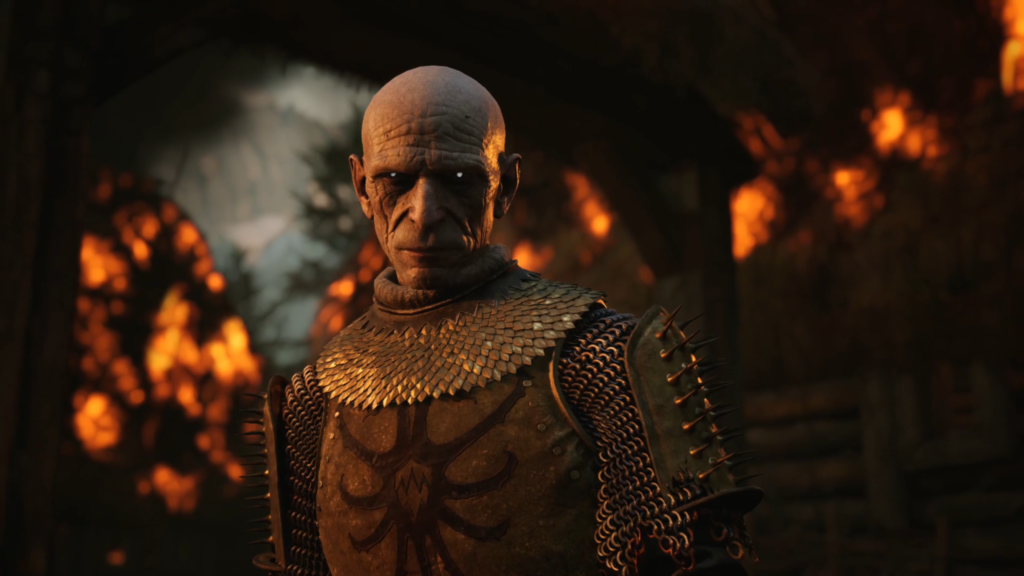
Seven Possible Outcomes Don’t Necessarily Mean Seven Playthroughs
There are multiple ways Coen’s story can conclude.
Six primary endings revolve around the outcome of saving his family, while allowing the 30-day deadline to expire creates another scenario entirely.
Failing to rescue them doesn’t simply produce a traditional Game Over screen.
The family can be sacrificed, after which Coen’s objective fundamentally changes.
You failed to save them.
Now you can pursue revenge.
That alone demonstrates how seriously Dawnwalker takes its central premise.
However, I wouldn’t describe the game as particularly replayable after seeing what it has to offer.
Many of the crucial decisions affecting the primary endings happen relatively close to the conclusion, and several endings share enough similarities that repeatedly working through them eventually became tiring.
My personal canon became the Turncoat ending, but I won’t explain exactly why here because doing so would spoil decisions players deserve to experience themselves.
After completing the game and seeing its different outcomes, I didn’t immediately want New Game Plus.
I didn’t want another 40 hours replaying the same world.
I wanted another 40 hours of new Dawnwalker content.
PS5 Pro Performance Isn’t Perfect
I completed the game on PlayStation 5 Pro using Performance Quality mode and never switched to the standard Quality option during my playthrough.
Performance wasn’t flawless.
There were noticeable frame drops and enough technical roughness that I wouldn’t describe the game as completely polished.
But there is probably an important compliment hidden in the fact that I rarely obsessed over those problems.
I was enjoying the game too much.
When a game has me constantly thinking about the next quest, character or decision, occasional performance problems become much easier to tolerate.
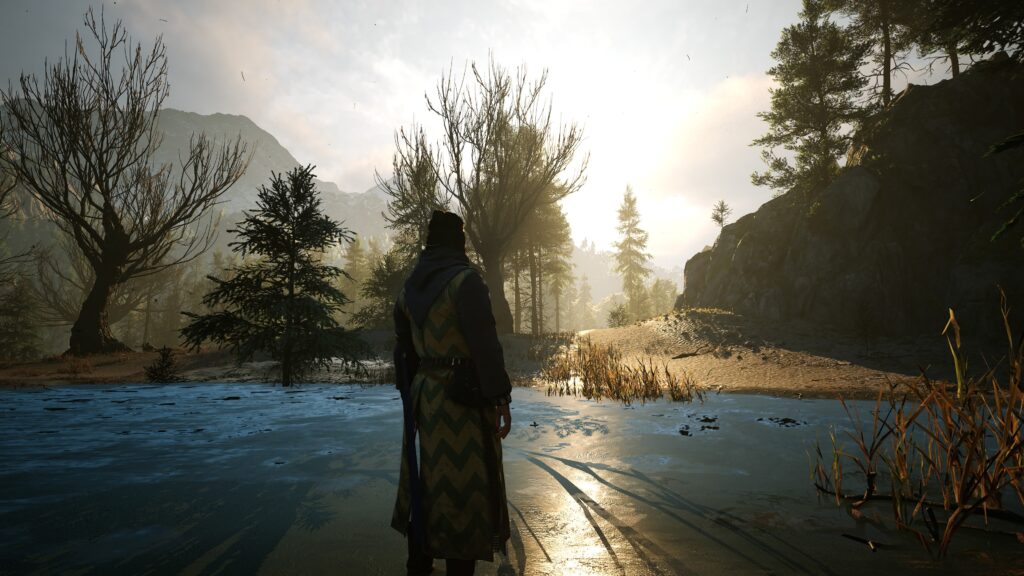
Visually, my larger criticism again concerns art direction and environmental variety rather than raw graphical quality.
At its best, Dawnwalker can look very good. Character presentation is particularly strong during important scenes, with Coen benefiting from convincing facial expressions and strong voice work.
The audio presentation is similarly solid.
Voice acting is consistently one of the game’s strengths, and the soundtrack itself is excellent.
My problem with the music was almost the opposite of what you’d normally expect:
I wanted to hear more of it.
It frequently felt too subdued in the overall mix, leaving some scenes without the musical presence they could have benefited from.
The Blood of Dawnwalker Is More Than the Sum of Its Flaws
There are plenty of things I would change about The Blood of Dawnwalker. Its world desperately needs more visual variety and more distinctive settlements, while the constant animal encounters often make travelling across an already sparsely populated map more frustrating than it needs to be. Some side quests and conversations could have been tightened, crafting never became particularly important to the way I played, and tying certain ability upgrades to the passage of time occasionally made character progression feel more restrictive than necessary. Add the performance issues I encountered on PS5 Pro and fairly limited reasons to replay the entire adventure once you’ve seen its major outcomes, and there is clearly plenty of room for improvement.
Normally, that combination of shortcomings would push a game significantly further down my list. Yet The Blood of Dawnwalker manages to overcome many of them because it has something that is much harder to quantify: a genuine identity of its own.
I’ve played countless open-world games that gradually cover their maps with icons and activities, essentially encouraging you to work your way through everything until there is nothing left. Dawnwalker takes a much more interesting approach. Instead of asking whether you can complete everything, it constantly makes you consider what is actually worth your time.
That simple idea ended up influencing almost every part of my adventure. I began choosing quests based on what I wanted to accomplish rather than simply because they appeared in my journal. I planned when to explore, when to pursue the main antagonists and which characters were worth helping. Even character progression became part of that calculation, since learning certain abilities meant sacrificing time that could otherwise have been spent elsewhere.
The 30-day limit that initially sounded like Dawnwalker’s biggest restriction ultimately became the mechanic that gave me the greatest sense of ownership over my journey. I rarely felt as though I was simply following a route prepared by the developers. I was deciding what mattered to my version of Coen and accepting that choosing one path might mean leaving something else behind.
Perhaps the strongest compliment I can give The Blood of Dawnwalker, however, is much simpler. Across roughly 65 hours, I genuinely looked forward to sitting down and playing it again.
It wasn’t because I needed another trophy or had another guide to finish. I wanted to know what would happen next and whether a decision I had made hours earlier might unexpectedly return to reward or punish me. I wanted to become stronger, confront Bakir, learn more about Brencis and see just how far the game was willing to follow through on the choices it allowed me to make.
That feeling lasted even when the game’s weaknesses became increasingly obvious. By the time the credits rolled, I knew exactly what I wanted to see improved, but I also realized that I wasn’t ready to leave Dawnwalker behind. I don’t particularly want another playthrough of the same valley or to repeat the same quests simply to make different choices. What I want is more of this world, more of these ideas and, most importantly, more Coen.
For me, The Blood of Dawnwalker currently stands as one of the best games I’ve played this year and a genuine Game of the Year candidate, sitting just behind Resident Evil Requiem among my personal favorites so far. It isn’t a flawless first step into this world, but it establishes a foundation with enough personality, ambition and genuinely clever ideas that I am far more interested in where it goes next than in dwelling on everything it didn’t get right the first time.
Verdict
The Blood of Dawnwalker – MUST PLAY: The Blood of Dawnwalker combines meaningful choices, excellent characters and a fascinating day-and-night structure with one of the most interesting approaches to time management I've encountered in an RPG. Its 30-day deadline sounds restrictive but instead gives weight to player freedom, forcing you to consider what — and who — deserves your limited time. An underpopulated and visually repetitive open world, inconsistent animal combat, occasional technical problems and limited replay value prevent it from reaching the very top of the genre. But its strongest ideas are memorable enough to survive those flaws. More importantly, Dawnwalker understands something many larger open-world RPGs have forgotten: Giving players everything isn't always freedom. Sometimes freedom is making them choose. – OverHypedG
✅ WHAT I LOVED
Brilliant 30-day system that gives genuine value to player decisions
Choices can produce consequences many hours later
Excellent writing throughout the strongest main and character questlines
Coen is a compelling protagonist with excellent voice acting
Brencis and Bakir are standout antagonists
Human and vampire progression creates meaningful build variety
Challenging combat becomes rewarding once its systems click
Exploration regularly rewards curiosity with gear, quests and surprises
Strong bounty system makes criminal actions matter
Multiple outcomes give the central premise genuine stakes
❌ WHAT COULD BE BETTER
Open world lacks environmental and architectural variety
Too much empty space between meaningful locations
Animal encounters are considerably weaker than human combat
Aggressive wildlife can make traversal unnecessarily frustrating
Some dialogue and side quests feel bloated or forgettable
Crafting never becomes particularly meaningful
Spending time to unlock abilities can feel unnecessarily restrictive
Day/night switching loses some of its novelty over a long playthrough
Noticeable frame drops and general technical roughness on PS5 Pro
Multiple endings don’t translate into particularly strong replayability